Site Generator Hire: How Many kVA Does Your Site Need?
Date: 23/03/26
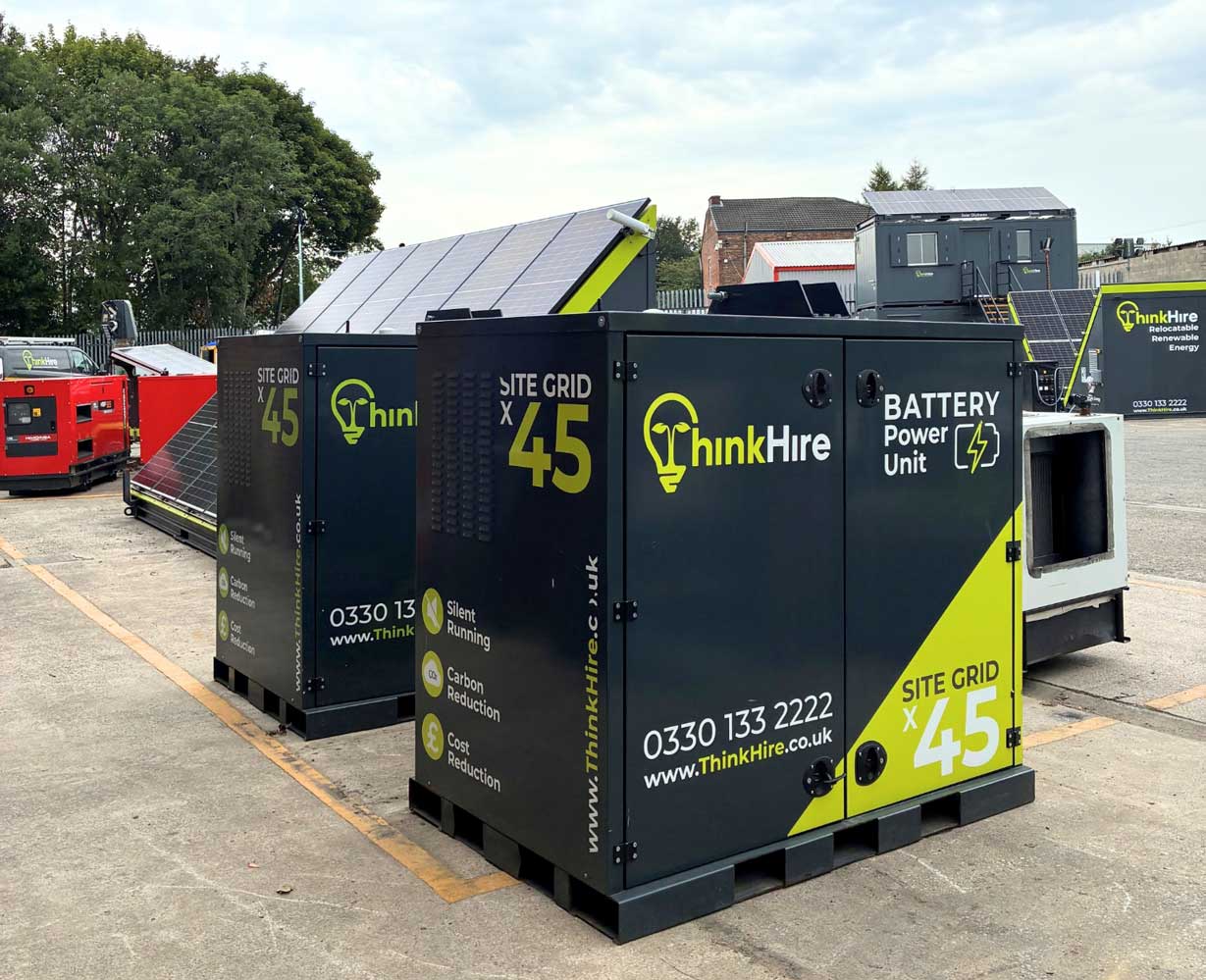
Choosing the correct size of generator is an essential part of site generator hire. Underestimate your power needs and your generator will trip constantly, causing power outages and loss of productivity. Overestimate your power needs and you will waste fuel and risk damage to your equipment, as well as causing unnecessary damage to the environment.
So how do you calculate the size of site generator hire that you need? In this simple guide to site generator sizing, we’ll walk you through the process of how to work out what size generator you need for your construction site.
It’s a simple enough process, and remember, the Think Hire expert team are always on hand to offer advice and guidance to help you choose the right site generator hire, including offering a full site design service for larger projects.
Understanding the Jargon: What is kVA?
kVA stands for kilo-volt amps and it measures the apparent, or total, power of a generator, as opposed to the active power output. You can think of kVA as the 'pipe' and kW as the 'water' flowing through it. The ratio of kVA to KW is determined by the efficiency of the system, and this is known as the Power Factor. For a three-phase generator, this is usually 0.8, which means that a 100kVA generator delivers 80kW of active power output.
Step by Step: What Size Generator Do I Need for a Construction Site?
You can work out your site generator hire needs by simply auditing all the equipment that the generator will need to run, including tools, lighting, welfare units, site offices, charging stations and anything else that draws power. Just follow these simple steps:
-
Step One – identify all electrical equipment on site – list all electrical items and identify which items will be run simultaneously.
-
Step Two – find the running wattage of all equipment – this is often given on the equipment itself, if not, you can find it in the manual. If only volts and amps are provided, use the formula Volts x Amps = Watts to give you the Wattage.
-
Step Three – identify the surge wattage of all equipment – items such as pumps and power tools need significantly higher power to get started than they do to run. Again, this will be listed on the equipment or in the manual.
-
Step Four – allow a safety margin of 20% – it is not advisable, or efficient, to run your generator at 100% all the time, so allow an additional margin so that it is running at around 80%. This will reduce fuel costs and avoid over-stressing the generator. Multiply your total load and surge loads by 1.25.
-
Step Five – convert your power needs to kVA – Think Hire generators are rated in kVA, not Watts. Convert by dividing the total and peak wattage by the power factor (0.8)
Sounds complicated? Get in touch with our team, and we’ll design the most efficient power setup for your site, including the right combination of solar, battery, and generator. Our experts will specify the most effective configuration for your project’s requirements.
The Danger of Oversizing Site Generator Hire
While it may be tempting to oversize your site generator hire ‘to be on the safe side’, this is not advisable for several reasons:
-
Inefficiency - oversized generators will run less efficiently, burning more fuel and increasing running costs
-
Wet Stacking – running generators at consistently low loads, below 50% output, causes ‘wet stacking’, where unburned fuel and soot build up and cause damage to the motor, reducing efficiency even further
-
Increased Hire Costs – larger site generator hire comes with larger hire costs, so you will be paying more than you need to
-
Environmental Damage – running a larger generator than you need, at inefficient loads, will produce more emissions and pollution, as well as increasing noise levels.
What is the typical generator size for a construction site?
Naturally, every site is different and has its own unique power requirements; however, the following are typical sizes for site generator hire:
-
6kVA - 10kVA - for small sites with basic cabins and hand tools
-
20kVA - 60kVA - for medium sites with welfare units, larger equipment and tower cranes.
-
>100kVA - for the largest scale infrastructure projects.
Think Hire offers a wide range of hybrid site generator hire, along with battery energy storage systems to deliver the power you need when and where you need it. Just let us know your power requirements, or talk to us about your site set up and we’ll work out your generator specs for you.
Always consult the experts
While it is possible to calculate the site generator hire you need for your site, Think Hire would always advise consulting a trained electrician to check your calculations and ensure you are specifying the correct power requirements. Think Hire will be happy to help you choose the right site generator hire. Just get in touch with our team for free expert advice.
Frequently Asked Questions
kVA stands for kilo-volt amps and it measures the apparent, or total, power of a generator, while kW measure the active, or useful, power. The ratio of total to active power is called the power factor, and is usually 0.8 for a three-phase generator.
Divide watts by 1000 to get a measurement in kW, then divide again by the power factor. For example, 10,000W / 1000 = 10kW / 0.8 = 12.5kVA
Yes. Because hybrid generators have battery storage as well as solar and diesel power, they can deal with peak loads more effectively, so you don’t need as big a generator.
Hybrid generators cut running costs in two ways. Firstly, they harness free solar energy, so the generator runs for less time. Secondly, the integrated battery supports surge loads, so the generator does not have to be as large, saving on both fuel and hire costs.
Download the Think Hire Brochure
We have over 60 years combined experience in the design, manufacture, hire and sale of innovative products, with an environmentally considerate power supply.